

ALER takes part in debate on African electrification at the Portugal Pavilion at COP31
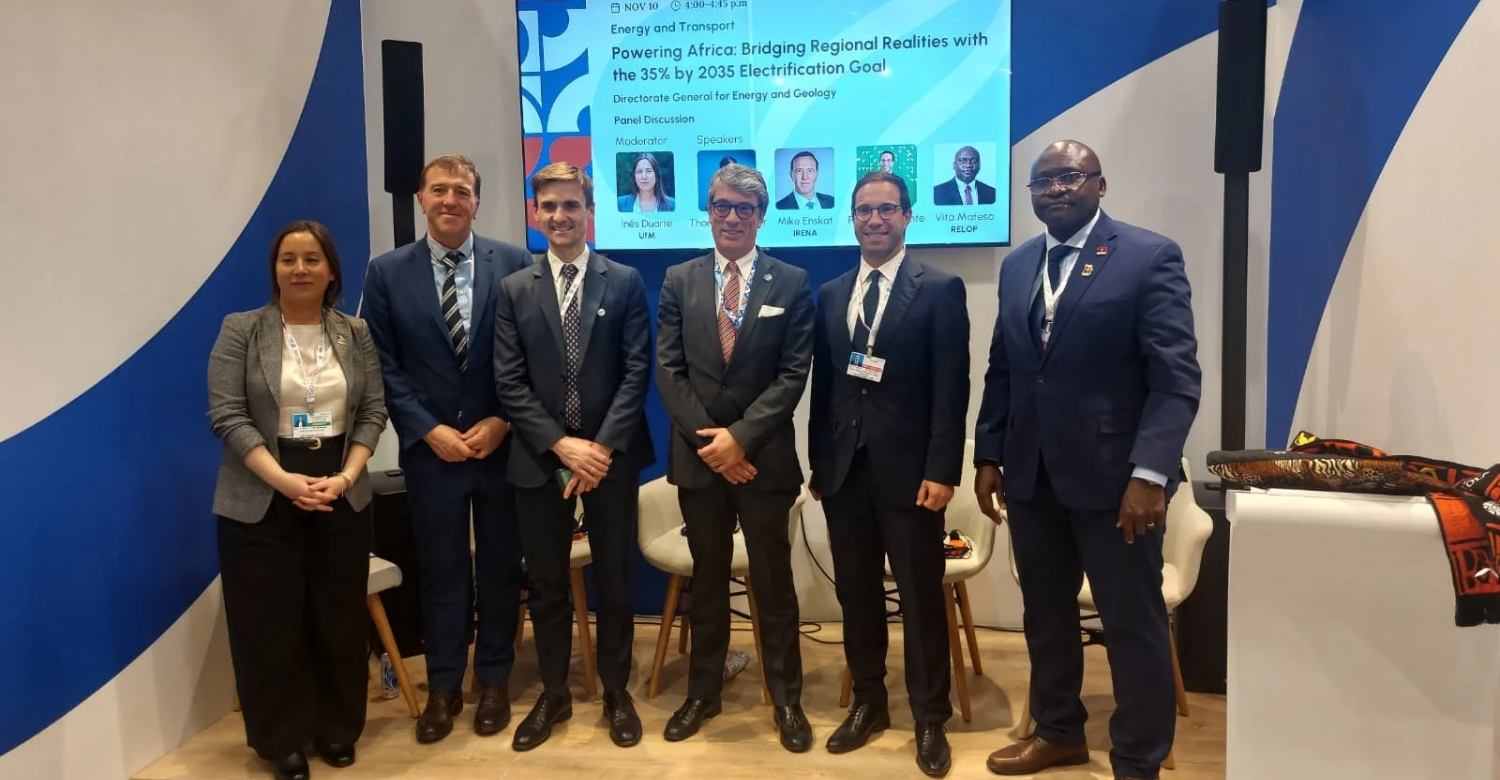
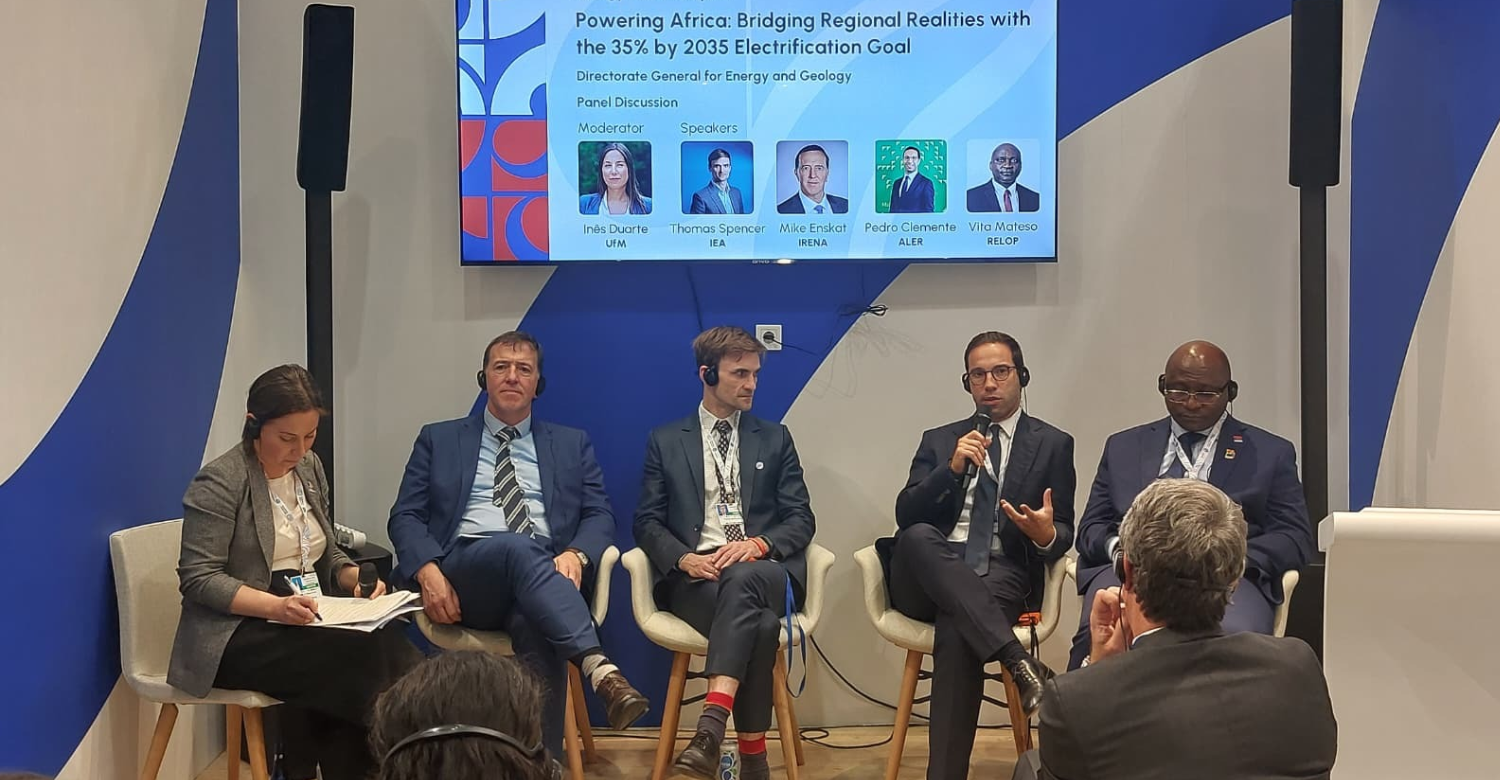
Pedro Clemente, Chief Operating Officer of ALER, took part on 10th November 2026 in the debate “Powering Africa: Bridging Regional Realities with the 35% by 2035 Electrification Goal”. The session was promoted by the Directorate-General for Energy and Geology of Portugal (DGEG) at the Portugal Pavilion of the 31st United Nations Climate Change Conference (COP31), in Antalya, Turkey.
The debate took place in the context of the global “35% by 35” pledge, which aims for electricity to account for 35% of global final energy consumption by 2035. The session discussed how different African countries and regions can accelerate electrification in line with their own realities, needs and development priorities. Topics under discussion included international cooperation, regulation, power system planning and investment.
The session was opened by Alexandre Santos, Director-General for Energy and Geology, and moderated by Inês Duarte, from the Energy and Climate Action Division of the Secretariat of the Union for the Mediterranean. The panel brought together Thomas Spencer, Senior Energy Analyst at the International Energy Agency (IEA), Mike Enskat, Director of the Innovation and Technology Centre at the International Renewable Energy Agency (IRENA), Pedro Clemente, from ALER, and Vita Mateso, Director of Energy Integration and Biofuels at ANPG (Angola) and Coordinator of the Oil, Gas and Biofuels Working Group of the Association of Energy Regulators of Portuguese-Speaking Countries (RELOP).
Drawing on ALER’s experience in Portuguese-speaking African countries, Pedro Clemente was invited to share the association’s perspective on the main barriers and opportunities for mobilising investment and delivering projects on the ground. He was also asked about the role of the private sector in expanding access to reliable electricity across Africa.
ALER’s participation in this session reinforces its commitment to promoting renewable energy and energy access in Portuguese-speaking countries. It also strengthens its role as a bridge between the private sector, governments and international partners.