

From vision to delivery: the PALOP countries and the investment connecting energy, territory and the future
The Lusophone Africa Investment Forum has a clear purpose: to move from dialogue to action. It brings together governments, businesses and investors to identify opportunities and build practical partnerships capable of mobilising greater private investment across the Portuguese-speaking African countries (PALOP). The second edition, promoted by the World Bank Group through the International Finance Corporation (IFC), took place on 26 and 27 October on the island of Sal, Cabo Verde. It attracted around 364 registrations, 43.3% more than in the 2025 edition, a clear sign of growing investor interest in these markets.
The figures help explain that interest. Together, the PALOP countries account for nearly 80 million people and an annual GDP of approximately USD 164 billion. But this potential will not materialise on its own: it requires stronger collaboration among governments, companies, investors and development partners. This was the rationale behind the Forum’s theme: “Investing in Lusophone Africa: Leveraging Corridors, Developing Agribusiness and Driving Sustainable Tourism”.
Each of these pillars follows its own economic logic. In the case of corridors, better transport, energy and digital connections reduce trade costs, bring markets closer together and make investment in other sectors more viable. The Lobito Corridor demonstrates how a logistics corridor can evolve into a genuine economic corridor. In agribusiness, investment in processing, storage, cold chains and distribution creates jobs, reduces imports and increases local value addition. In tourism, the PALOP countries’ natural assets attract foreign exchange, support SMEs and generate employment in hospitality, transport, food services and creative industries.
There is one common denominator across all these sectors: energy. Without reliable and affordable electricity, none of them can reach their full potential. That is why the Mission 300 initiative deserves particular attention. Led by the World Bank Group and the African Development Bank Group, the initiative aims to connect 300 million Africans to electricity by 2030. During the Forum, Cabo Verde and Guinea-Bissau presented their National Energy Compacts under Mission 300. These compacts demonstrate that expanding energy access, strengthening energy security and prioritising sustainable solutions are becoming concrete priorities within national agendas. By translating reform commitments into investment programmes, they also send a strong signal of ambition to investors.
There is also a visibility dimension that deserves particular attention. Portuguese-speaking African markets are often analysed individually, which does not always allow their full economic potential, investment opportunities and possibilities for cooperation to be properly understood. Between the first and second editions of the Lusophone Africa Investment Forum, the IFC invested and mobilised approximately USD 700 million across the PALOP countries through private-sector operations.
Beyond that investment, the Forum helped identify companies, investors and business opportunities that may be followed up by the IFC with a view to structuring viable projects and mobilising additional financing and private capital, particularly in the agribusiness, energy and infrastructure, and tourism sectors.
The PALOP countries have scale, resources and a geography that connects them to multiple markets. With consistent cooperation and results-oriented investment, they can play a leading role in both the energy transition and the continent’s economic growth. Sal was another step along that path. The next edition, in Angola, will be the moment to measure results: in financed projects, realised investment and jobs created.
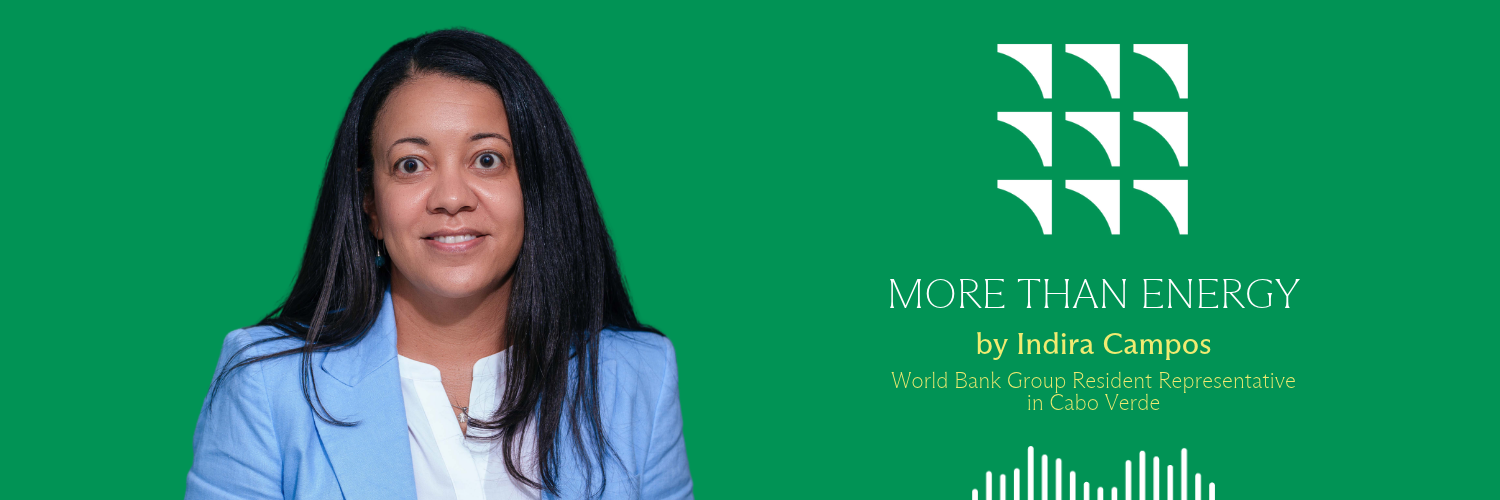
Indira Campos
World Bank Group Resident Representative in Cabo Verde