

INSIDE and sustainable mobility: the future lies in the diversification of energy sources
With operations in Portugal and Angola, INSIDE – Engineering & Consulting, Lda. is an engineering and consulting company specialising in the energy, infrastructure, transport and environmental sectors.
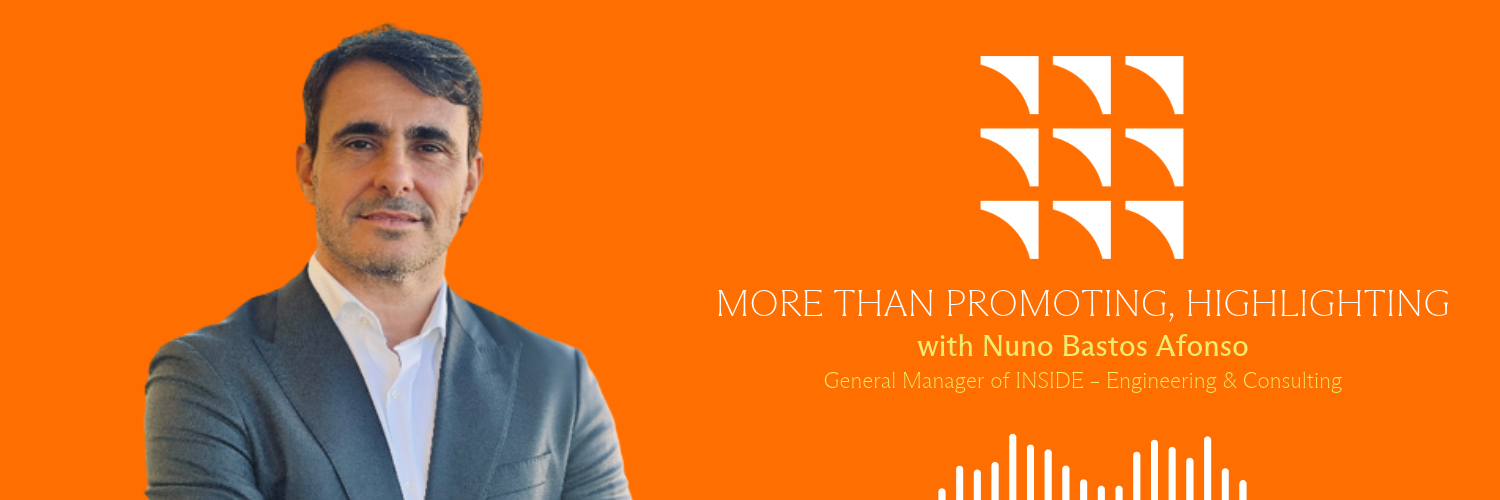
In this interview with ALER, Nuno Bastos Afonso (Founding Partner and General Manager of INSIDE), shares his views on the challenges and opportunities of sustainable mobility, highlighting the role of electrification, biofuels and green hydrogen in the decarbonisation of transport, as well as the opportunities associated with the energy transition in Angola.
INSIDE has been diversifying its areas of activity. How does sustainable mobility fit into the company's strategy?
INSIDE is an engineering and consulting company operating in Portugal and Angola, with expertise across sectors such as energy, infrastructure, transport and environment.
The diversification of our business into new energy transition areas represents a natural evolution of INSIDE's strategy, building on the experience we have accumulated in the energy, transport and infrastructure sectors. This approach allows us to expand our activities into new market segments while supporting the transformation of energy and mobility systems.
In this context, we have been strengthening our focus on sustainable mobility and alternative energy sources, particularly transport electrification, biofuels, biomethane and green hydrogen.
Our goal is to contribute to the development of technically sound, economically viable and environmentally responsible solutions, supporting public and private entities in the transformation of their energy and mobility systems.
What do you consider to be the main challenge in achieving truly sustainable mobility?
The main challenge will be finding solutions that reduce carbon emissions without compromising the efficiency, accessibility and competitiveness of transport systems.
In our view, the mobility of the future, in order to be truly sustainable, will require a mix of low-carbon energy sources, including electrification, biofuels, synthetic fuels (e-fuels) and, in the longer term, green hydrogen.
We do not believe there is a single technological solution suitable for all transport segments. For example, the needs of urban mobility are different from those of long-distance road freight transport.
The transition must therefore be gradual, balanced and adapted to the economic, energy and infrastructure realities of each country.
How important is the electrification of urban mobility?
Electrification is one of the most promising solutions for the decarbonisation of urban mobility.
The use of electric vehicles helps reduce local pollutant emissions, decrease noise pollution, improve air quality and increase energy efficiency.
However, electrification goes beyond simply replacing vehicles. It requires the development of charging infrastructure, reinforcement of electricity networks and adequate planning of future energy needs.
It is precisely at this intersection of energy, infrastructure and mobility that we see opportunities to apply INSIDE's engineering and consulting expertise.
What role can biofuels play in this transition?
Biofuels can play a very significant role, particularly during the energy transition period.
One of their main advantages is the possibility of leveraging part of the existing fuel storage, distribution and refuelling infrastructure, as well as, depending on the type of biofuel and its technical specifications, existing internal combustion engines.
This characteristic makes it possible to progressively reduce the carbon intensity of transport without requiring the immediate replacement of the entire vehicle fleet.
In addition, the sustainable production of biofuels can help increase the value of agricultural resources and waste streams, promoting the circular economy, job creation and the development of new value chains.
From an economic and strategic perspective, biofuels also represent an opportunity to develop new industrial activities, attract investment and reduce dependence on imported fuels.
Naturally, it is essential to ensure that biofuel production complies with strict environmental sustainability criteria and does not compromise food security.
And what about green hydrogen? Can it play an important role in transport?
We believe that green hydrogen has interesting medium to long-term potential, particularly in transport segments where direct electrification may face greater challenges.
Heavy-duty road transport, especially long-haul freight transport, is one of the areas where this technology could find relevant applications, particularly where high levels of range and operational availability are required.
However, significant challenges remain regarding production costs, energy efficiency, storage, and distribution and refuelling infrastructure.
For this reason, we believe it is essential to continue investing in research, technological development and the assessment of these solutions through pilot and demonstration projects.
Green hydrogen should be viewed as a complementary alternative whose competitiveness will depend on technological progress and specific use cases.
How do INSIDE's technical capabilities and multidisciplinary experience help clients make strategic decisions, develop projects, optimise investments and create value throughout the project lifecycle?
INSIDE brings together multidisciplinary expertise across the energy, transport and infrastructure sectors, providing specialised engineering and technical and strategic consulting services, with growing involvement in sustainable mobility and alternative energy solutions, including biofuels.
The combination of technical knowledge, engineering experience and project assessment and structuring capabilities enables us to support clients in strategic decision-making throughout the different phases of their investments, from design and planning through construction, operation and maintenance, developing solutions tailored to their needs and market challenges.
These capabilities translate into a portfolio of specialised services that includes technical and economic feasibility studies, infrastructure planning, engineering studies, technology assessment, strategic consultancy, project management and supervision, as well as operation and maintenance support services.
Through these services, we help clients identify the most appropriate technical solutions, assess investment alternatives, optimise construction and operating costs, and anticipate technical and operational risks.
In this way, we seek to add value to our clients' investments by promoting solutions that combine technical performance, economic efficiency and operational reliability throughout the entire project lifecycle.
What opportunities do you see for Angola in the development of these solutions?
Angola has significant potential to develop a sustainable mobility strategy based on the diversification of energy sources, benefiting from its natural resources, renewable electricity generation potential and the opportunities associated with modernising transport systems.
In the field of electric mobility, Angola could find particularly relevant opportunities in the gradual electrification of public and corporate transport fleets, combined with the development of charging infrastructure and the strengthening of electricity networks. The successful implementation of these initiatives will require energy planning, technical and economic feasibility assessments and coordination among stakeholders in the energy and transport sectors.
At the same time, we believe that biofuels could play a strategic role in Angola's economic and industrial development. The availability of agricultural resources and the potential use of domestic feedstocks could support the development of value chains ranging from agricultural production to industrial processing and the distribution of sustainable fuels.
This opportunity goes beyond environmental benefits and could contribute to economic diversification, the valorisation of domestic production, reduced dependence on imported fuels, the creation of qualified jobs and the development of new technological and industrial capabilities.
However, unlocking this potential will depend on consistent public policies, an appropriate regulatory framework and conditions that encourage private investment, infrastructure development and technical capacity building.
In our view, Angola has the conditions needed to turn the energy transition in the transport sector into an opportunity for economic, industrial and technological development, provided that this process is gradual, structured and adapted to the country's realities.
What is INSIDE's vision for the future of sustainable mobility?
Our vision is to strengthen INSIDE's position as a leading provider of specialised engineering and consulting services, supporting the evolution of the energy, transport and infrastructure sectors while expanding our presence in emerging energy transition areas.
We aim to continue developing capabilities, building strategic partnerships and identifying new opportunities, contributing to investments that promote infrastructure modernisation and sustainable economic development.
Along this journey, we particularly value ALER's role in fostering cooperation, knowledge sharing and closer collaboration among energy sector stakeholders across Portuguese-speaking countries. For INSIDE, ALER is an important platform for developing strategic relationships and strengthening our presence in the sustainable energy sector, particularly in Angola.