

REN Angola – 1st Renewable Energy Business Forum in Angola officially launched internationally at COP31
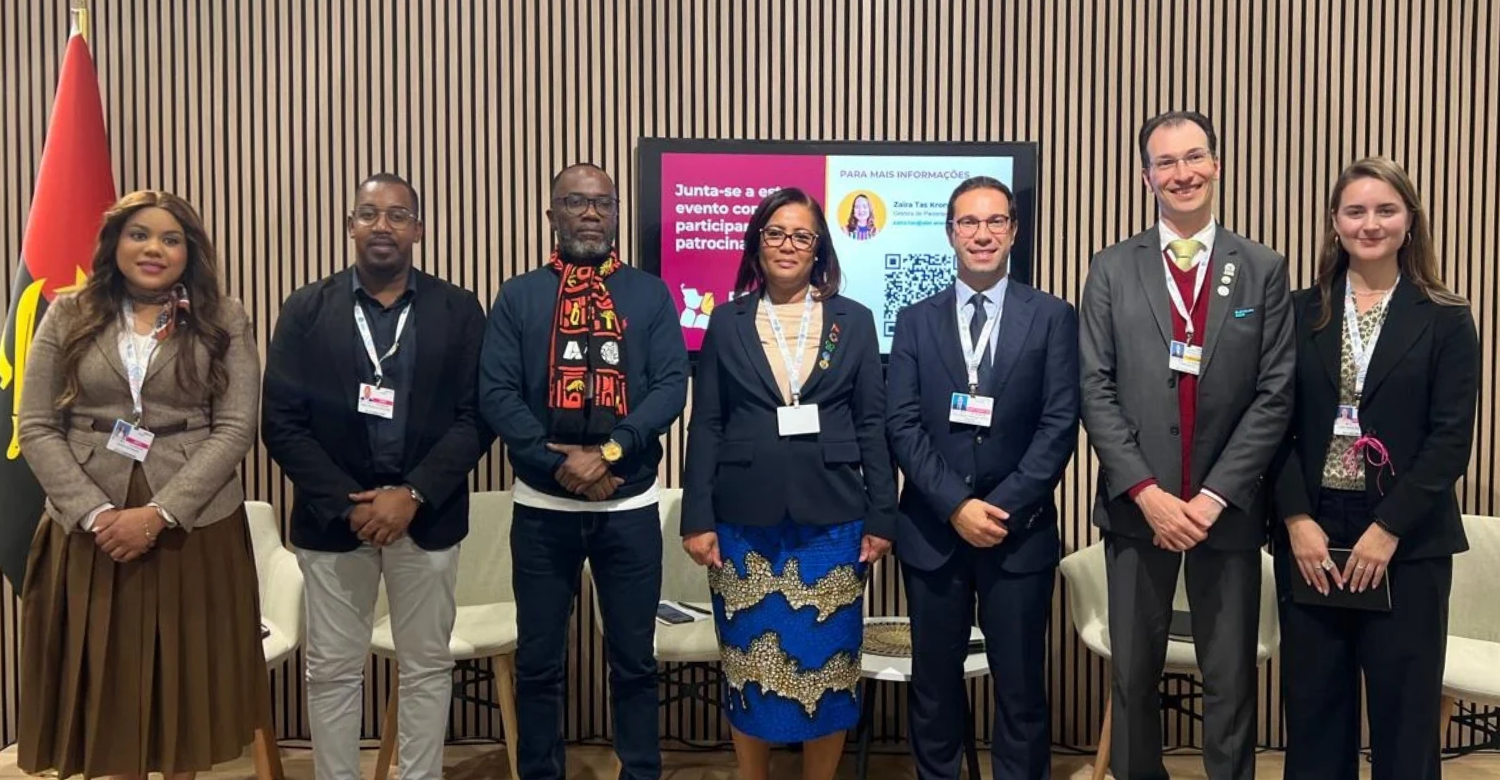
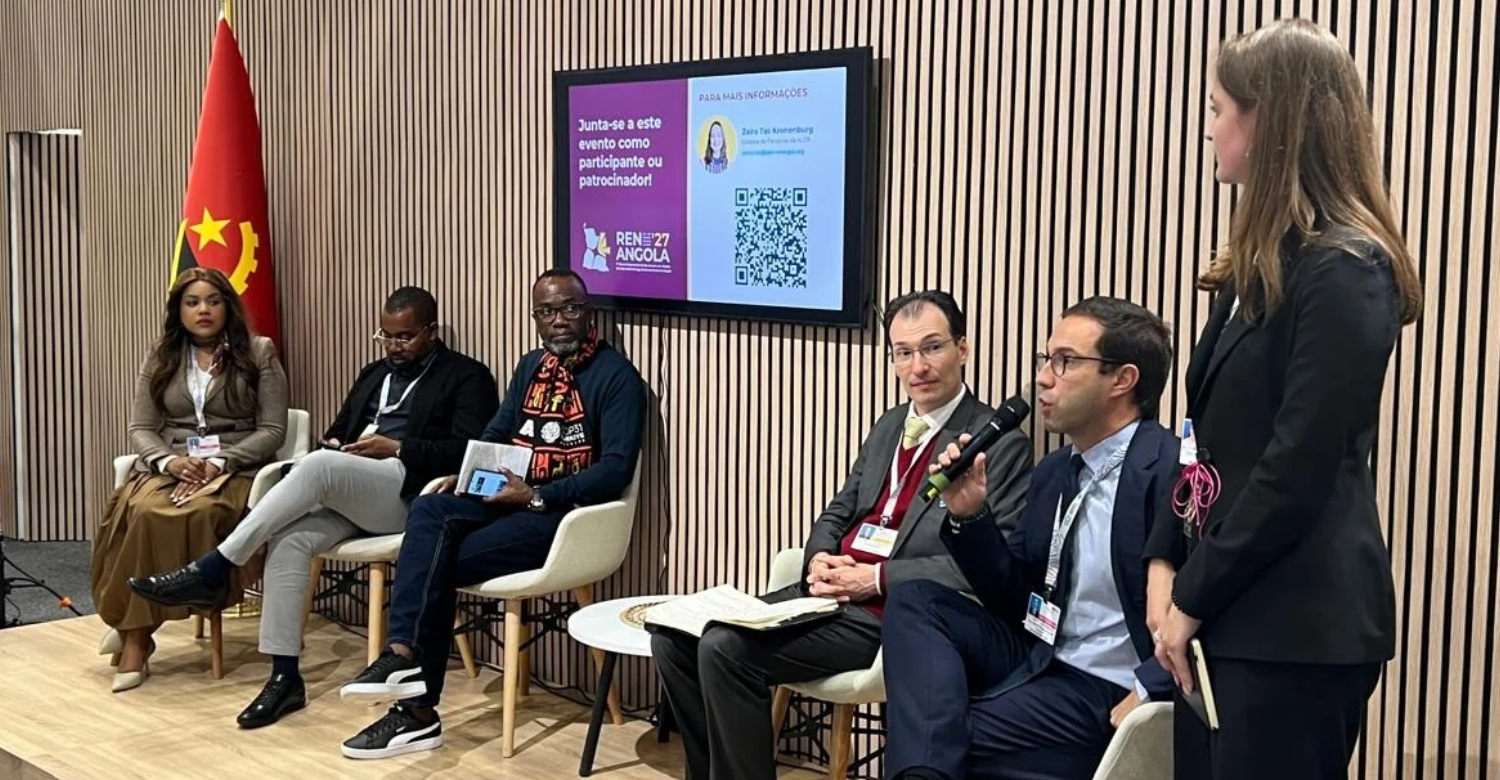
ASAER and ALER today launched REN Angola 2027 – the 1st Renewable Energy Business Forum in Angola at the Angola Pavilion at COP31. The event will take place in Luanda on 25th and 26th January 2027, with the support of the Ministry of Energy and Water of Angola (MINEA). The session also marked the opening of registrations and sponsorship opportunities for the Forum.
Angola’s electricity sector faces challenges relating to energy access, reliability and financial sustainability. At the same time, new opportunities are emerging: the revision of the regulatory framework is creating greater scope for private sector participation, while the recent increase in electricity tariffs for businesses and industry is making self-consumption more competitive. This context strengthens the business case for self-consumption and highlights the importance of business dialogue that directly connects energy generation with consumption. This is precisely the response that REN Angola aims to deliver.
Building on the success of the International Renewable Energy Conference in Angola, organised by ALER and ASAER in 2022, REN Angola positions renewable energy as a solution for improving energy access and as a driver of industrialisation, productive electrification and regional integration. This first edition will focus on the regulatory framework and business opportunities for productive self-consumption in Angola.
By placing industry, mining, agriculture, tourism, the digital sector, and the residential and commercial sectors at the centre of the discussion, REN Angola brings energy consumers to the table. These are the sectors that generate demand and, as credible customers, provide financial institutions with the confidence needed to finance projects.
Victor Fontes, President of ASAER, delivers a clear message: “We want this event to become a benchmark, an essential meeting point held on a regular basis and adapted to market needs”. Regarding this first edition, he adds: “Our objective is to bring together the institutional stakeholders responsible for defining policies, businesses from the real economy, companies providing energy solutions, and financial institutions willing to finance them, in order to promote projects that contribute to the country's development, where energy plays a crucial role”.
For Isabel Cancela de Abreu, Executive Director of ALER, “Through RENMOZ, which we have organised in Mozambique for five editions, we have learned that a business forum can transform a country's energy potential into concrete projects, partnerships and investment. This is the successful experience we now want to replicate in Angola, but with an innovative approach: rather than speaking exclusively to the energy sector, REN Angola places consumers and productive sectors at the centre”. She adds: “Angola has all the conditions to become a benchmark for self-consumption”.
Opening the session, Jandira Ribeiro, representing MINEA, began by recalling that, following the amendment to the General Electricity Law in 2025, the electricity market was liberalised: “Today, both national and international private sector players can invest in electricity generation, transmission, distribution and commercialisation”. She then reaffirmed MINEA's institutional support for the Forum: “One of the platforms we recommend to drive this process forward is REN Angola, which will bring together investors, business leaders, public and private sector representatives, and academia, so that we can maximise Angola's economic potential through renewable energy solutions”.
Márcio Araújo, from Endiama, highlighted the potential of renewable energy in the mining sector: “The use of fuels in mining areas has had a very significant impact. These are very remote areas with no alternative energy sources. Solar panels would be an alternative which, even at the study stage, we have found to be efficient. It would be worthwhile to explore this option and embrace this new challenge”.
Francisco Cortês, representing the Ministry of Agriculture and Forestry (MINAGRIF), clearly outlined the benefits of the solutions that REN Angola aims to promote: “If we remove diesel and replace it with renewable energy, we can reduce the cost structure of agricultural production, making our producers much more resilient and far more competitive in the regional market”.
Drawing on Brazil's experience, Rodrigo Sauaia, Executive President of ABSOLAR, emphasised the role of financing: “It is very important to bring banks, financiers and international partners to these types of events, so that we can effectively implement (…) all these project pipelines”. He added: “Brazil, like Angola, has very similar agricultural, mining and industrial sectors, with comparable market sizes. All the experience accumulated and the journey Brazil has already undertaken can be shared with Angola through a genuine exchange of knowledge and expertise”.
Over two days, REN Angola will bring together around 200 participants for institutional and sector-specific panel discussions, with banking and financing as cross-cutting themes. The programme will also include a case study on the Lobito Corridor and dedicated B2B and B2G matchmaking sessions.