
'Achieving universal energy access requires levels of investment that can only be attained through partnerships between the Government, investors and development partners'
The fifth edition of the Mozambique Renewable Energy Business Conference (RENMOZ 2026) takes place at a particularly important moment for the national energy sector. At a time when the world is seeking to address the challenges of climate change, energy security and economic development, Mozambique reaffirms its conviction that the energy transition must be pursued in a fair, inclusive manner and adapted to the realities of each country.
This vision is based on the principle that there is no single pathway for all countries, as each nation has different resources, needs and levels of development that must be taken into account to ensure economic growth, job creation, industrialisation and universal access to energy.
Renewable energy in Mozambique is an essential pillar of the country’s energy strategy and energy mix diversification, while recognising the role that natural gas will continue to play as a transition fuel. The development of our gas reserves will generate revenue, drive industrialisation, strengthen energy security and create the necessary conditions to sustainably accelerate the integration of renewable energy sources into the national energy mix.
Our hydropower potential of more than 18 GW, approximately 23 GW of solar potential, significant wind resources and substantial natural gas reserves place Mozambique in a privileged position to contribute simultaneously to regional energy security and the global energy transition.
However, transforming this potential into development requires much more than natural resources. It requires a modern, predictable and transparent regulatory environment capable of attracting investment. With this purpose in mind, the Government recently completed an important cycle of structural reforms, including the approval of the Energy Concessions Regulation and the Universal Access Fee, instruments that strengthen legal certainty, promote competition and create favourable conditions for private investment.
The private sector therefore plays a central role in delivering this vision. Achieving universal access to energy, expanding generation capacity, developing decentralised solutions, strengthening the electricity grid and implementing large-scale energy infrastructure projects require levels of investment that can only be achieved through partnerships between the Government, investors and development partners.
Flagship projects such as the Mphanda Nkuwa Hydropower Plant, the Massingir and Mavuzi II power plants, and solar mini-grid programmes demonstrate that Mozambique is ready to attract long-term investment, offering concrete opportunities across the entire energy value chain.
The results achieved reinforce this confidence. Between 2018 and 2026, the national electrification rate increased from 30% to 66%, reflecting the Government’s commitment to expanding access to energy as an essential condition for economic and social development.
We expect RENMOZ to serve as a catalyst for viable and bankable projects, establishing itself as a privileged platform that brings together governments, investors, financial institutions, companies, academia and development partners.
The country’s energy future will be built on a balanced vision that combines renewable energy and natural gas, private investment, technological innovation and consistent public policies.
It is this integrated approach that will enable Mozambique to address both the challenges of the global energy transition and the development needs of its population.
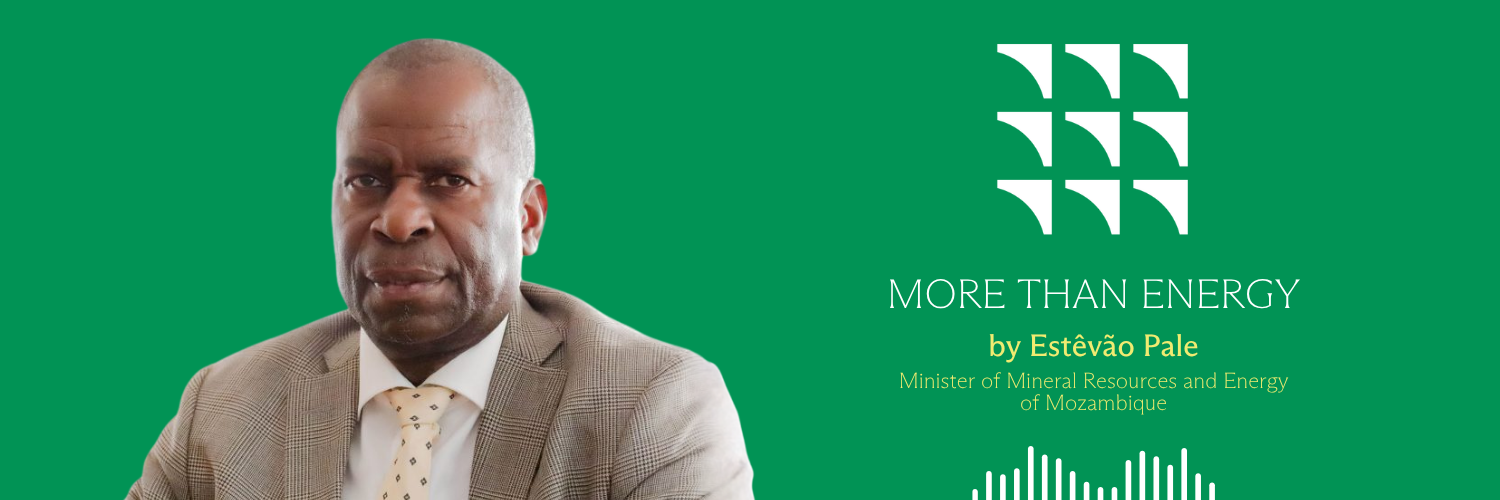
Estêvão Pale
Minister of Mineral Resources and Energy of Mozambique