

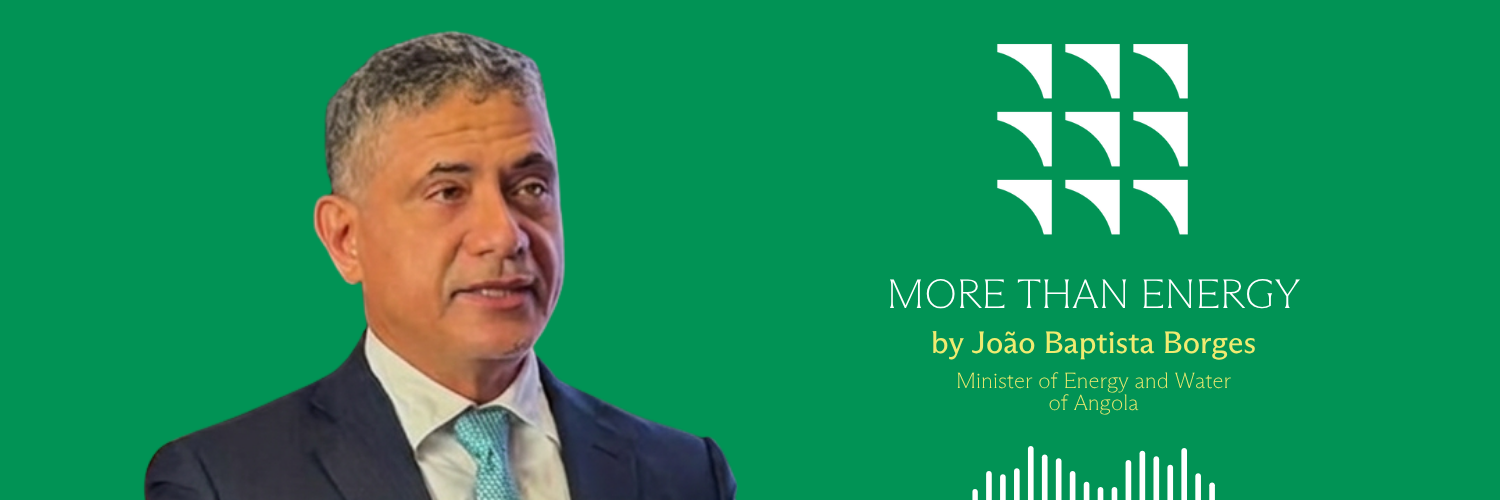
'Angola remains open to international cooperation, private investment and strategic partnerships that can accelerate the financing of sustainable projects'
The energy transition today represents both one of the greatest challenges and one of the greatest opportunities for countries seeking to ensure sustainable development, energy security and inclusive economic growth. In Angola, this process is being conducted in a structured, responsible and strategic manner, in line with the vision of the Executive led by His Excellency the President of the Republic, João Lourenço.
Angola’s commitment to the energy transition is clear and unequivocal. The country possesses extraordinary natural resources. Hydropower, solar, wind and biomass, which provide it with unique competitive advantages in the African context. The Executive’s vision is to harness these resources in order to ensure a modern, sustainable energy system capable of meeting the needs of the population and the national economy.
This direction was reaffirmed by President João Lourenço during the United Nations Climate Change Conference in Glasgow (COP26), where Angola committed to continuing to expand clean energy generation and strengthen measures to combat climate change. On that occasion, the Head of State emphasised that Angola aims to consolidate a predominantly clean energy mix, based mainly on renewable sources, particularly hydropower and solar, thereby contributing to global decarbonisation efforts.
It is within this framework that the Energy and Water sector has been implementing a wide range of structural projects that are transforming the national energy landscape.
Angola currently has one of the cleanest energy mixes in Africa, with around 70% of electricity generated from renewable sources, mainly hydropower, a share that the Government intends to progressively increase in the coming years.
In the solar energy domain, Angola is implementing one of the most ambitious clean electrification programmes on the African continent. Solar power plants under construction and already in operation represent a historic milestone in the diversification of the national energy mix and in expanding access to electricity in regions previously dependent on fossil fuels.
Among the most notable projects are the Biópio and Baía Farta solar parks, in Benguela Province, with a combined capacity exceeding 280 MW, making them among the largest solar projects in Sub‑Saharan Africa. These projects represent a significant step forward in reducing carbon emissions, lowering reliance on thermal power generation and promoting regional economic development.
It is also important to highlight that several major solar plants are already in operation in the eastern region of the country, namely the Luau and Cazombo solar parks in Moxico Leste Province, as well as the solar parks in Luena (Moxico), Saurimo (Lunda Sul) and Lucapa (Lunda Norte).
These projects are significantly improving electricity supply for local populations, reducing reliance on thermal generators and enhancing the stability of energy supply in these regions.
In Lunda Norte Province, the Government is also preparing to bring into operation, in the near future, the Cuango and Cafunfo solar parks, enabling more communities to benefit from clean, reliable and sustainable energy, with a direct impact on quality of life and local economic activity.
The Angolan Government is also implementing new solar projects in other provinces, as part of its renewable energy expansion and universal access programmes. These investments will bring clean and sustainable energy to communities, stimulate local productive activities and significantly improve living conditions.
The national energy strategy also includes hybrid solutions and off‑grid systems for remote areas, combining solar energy with battery storage, thus accelerating rural electrification and reducing operational costs associated with fuel transport.
At the same time, Angola continues to strengthen its position as a major African hydropower producer. Large hydroelectric projects, both existing and under development, are key pillars of national energy security and the country’s energy transition strategy.
The Capanda Hydroelectric Power Plant represents a historic milestone in Angola’s energy production, having played a decisive role in the recovery and stabilisation of the National Electricity System. Cambambe, in turn, has undergone significant expansion and modernisation works, greatly increasing its capacity and improving the reliability of electricity supply.
The Laúca Hydroelectric Power Plant is one of the largest energy infrastructures in Africa and currently the country’s main electricity generation centre. This project symbolises Angola’s capacity to deliver large‑scale strategic infrastructure essential for sustaining economic and industrial growth.
Similarly, the Caculo Cabaça project, currently under development, represents another strategic step in expanding national hydropower capacity. With a high installed capacity, this infrastructure will strengthen energy security, increase the country’s potential for electricity exports in Southern Africa and consolidate Angola’s leadership in clean energy.
The Angolan Government sees the energy transition not only as an environmental imperative, but above all as a driver of economic development and social inclusion. Expanding access to electricity is essential for industrialisation, job creation, strengthening basic social services and improving living conditions for the population.
At the same time, Angola remains open to international cooperation, private investment and strategic partnerships that can accelerate technological innovation, capacity building and the financing of sustainable projects.
In this context, it is important to highlight the relevance of institutional collaboration between the Ministry of Energy and Water and ALER, whose work has contributed to strengthening cooperation in the Lusophone space, promoting knowledge exchange and fostering the development of renewable energy in our countries.
Angola will remain committed to building a more sustainable, inclusive and resilient energy future, placing energy at the service of human development, economic progress and environmental preservation for future generations.
João Baptista Borges
Minister of Energy and Water of the Republic of Angola