
Tracking SDG7 2026 report highlights different energy access realities across Portuguese-speaking countries
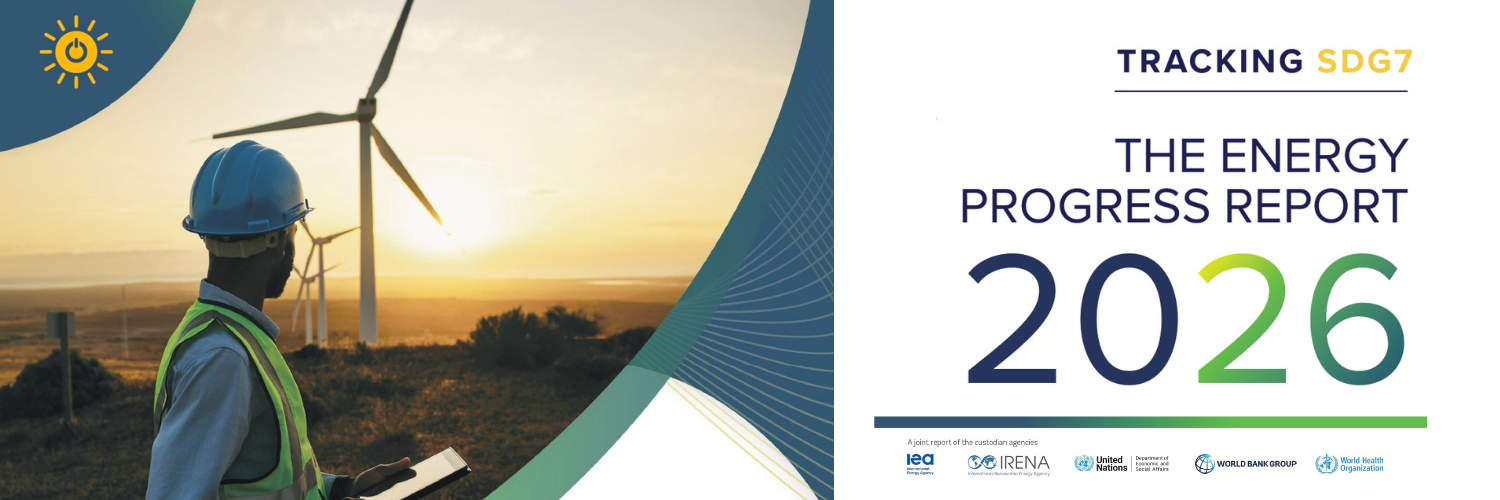
The latest Tracking SDG7: The Energy Progress Report 2026, published by IRENA, the International Energy Agency (IEA), the United Nations Statistics Division (UNSD), the World Bank and the World Health Organization (WHO), confirms that global progress towards Sustainable Development Goal 7 (SDG7) remains insufficient to ensure universal access to sustainable energy by 2030. In 2024, around 655 million people still lacked access to electricity, while approximately 2 billion people continued to rely on polluting fuels and technologies for cooking.
Across Portuguese-speaking countries, the data reveal a landscape marked by significant contrasts. While Portugal, Brazil, Cabo Verde and Timor-Leste are approaching or have already achieved universal electricity access, several African countries continue to face major challenges, particularly in rural areas.
In 2024, Portugal maintained universal access to electricity, while Brazil recorded an access rate of 99.8% and Cabo Verde 98.4%. Timor-Leste also achieved a high level of electrification, with 94.3% of its population having access to electricity. By contrast, São Tomé and Príncipe (77.7%), Equatorial Guinea (65.2%), Angola (55.5%), Guinea-Bissau (43.7%), and Mozambique (36.9%) continued to record substantially lower levels of access.
It is worth noting that, in the case of Mozambique, the figures presented in Tracking SDG7 differ from the most recent national data. According to the Briefing: Renewables in Mozambique, published by ALER and AMER, the national electrification rate reached 66.4% in 2025.
Comparing with 2023 data, the most notable improvements were recorded in Angola, where electricity access increased from 51.1% to 55.5%, and in Guinea-Bissau, which improved from 40.5% to 43.7%. By contrast, the report indicates slight declines in São Tomé and Príncipe, from 81.3% to 77.7%, and in Timor-Leste, from 100% to 94.3%.
The challenges become even more evident when comparing urban and rural areas. In Angola, electricity access reaches 78% in urban areas but drops to only 1.3% in rural areas. In Equatorial Guinea, access stands at 89.3% in urban areas compared to just 5.1% in rural areas. Mozambique also shows a significant disparity, with 79.8% urban access versus 12.3% rural access. These figures highlight the importance of decentralised solutions such as mini-grids and standalone solar systems to accelerate electrification in remote communities.
The Tracking SDG7 2026 report also confirms that Mozambique and Angola remain among the countries with the largest electricity-access deficits worldwide. In 2024, approximately 21.9 million people in Mozambique and 16.9 million people in Angola still lacked access to electricity. Guinea-Bissau also remains among the 20 countries with the largest electrification deficits, with around 1.24 million people without access.
While access to electricity remains a major challenge, the situation is even more demanding in the area of clean cooking. In 2024, Portugal (98.8%), Brazil (97.5%), and Cabo Verde (88.5%) recorded high levels of access to clean cooking fuels and technologies. By contrast, Angola (56.0%), Equatorial Guinea (50.0%), Timor-Leste (18.6%), Mozambique (7.7%), São Tomé and Príncipe (6.5%), and Guinea-Bissau (2.1%) remained well below these levels.
Particularly concerning is the case of Mozambique, identified by the report among the countries where less than 10% of households use clean cooking fuels and technologies. Nevertheless, almost all Portuguese-speaking countries recorded improvements compared to 2023, albeit at a pace insufficient to achieve universal access by the end of the decade.
Regarding renewable energy, Portuguese-speaking countries generally perform strongly. In 2023, the share of renewables in total final energy consumption reached 84.6% in Guinea-Bissau, 76.1% in Mozambique, 50.2% in Brazil and 49.9% in Angola. Portugal recorded a share of 35.4%, São Tomé and Príncipe 40.3%, and Cabo Verde 22.8%, while Timor-Leste (9.8%) and Equatorial Guinea (4.5%) reported lower shares. It should be noted, however, that the high shares of renewable energy observed in African countries such as Guinea-Bissau, Mozambique, Angola, and São Tomé and Príncipe reflect a concerning reliance on solid biomass for cooking.
Brazil continues to stand out internationally. Among the world’s largest economies, it is one of the countries with the highest share of renewables in its energy mix, supported by hydropower, biomass and biofuels. According to the report, biofuels account for 99% of renewable energy used in Brazil’s transport sector, helping the country remain among the global leaders in modern renewable energy.
International financing also continues to play a decisive role in the energy transition. Since 2010, Brazil has attracted approximately USD 8.8 billion and Angola around USD 6.5 billion in international public financing commitments for renewable energy. In 2024, Angola was among the largest recipients of these financial flows, benefiting from a USD 778 million loan for electricity transmission infrastructure development. During the same period, Banco do Brasil received a USD 512 million credit line to support renewable energy projects.
The findings of Tracking SDG7 2026 show that Portuguese-speaking countries are progressing at different speeds. While some countries are approaching universal access to energy, others continue to face structural challenges related to electrification and clean cooking. At the same time, the strong contribution of renewable energy across several of these markets demonstrates the potential of the CPLP region to support global decarbonisation efforts. In this context, mobilising financing, strengthening energy infrastructure, and expanding both electrification and clean cooking access will remain critical to accelerating sustainable and inclusive energy transitions across Portuguese-speaking countries.