
More than numbers: the impact of APP on Cabo Verde’s energy transition and local development
In Cabo Verde, the energy transition is happening because there are those who implement, respond to the country’s challenges, and turn vision into action – and APP – Águas de Ponta Preta is a clear example of this transformation on the ground.
With IPP projects on islands such as Sal and São Vicente and impact at a national scale, APP has been a strategic partner to the Government, betting on innovative solutions and a diversity of technologies adapted to the country’s insular reality.
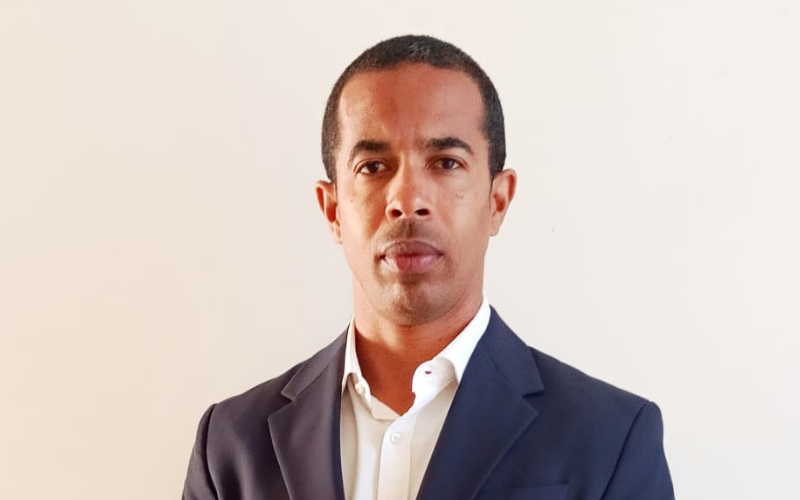
We spoke with Jânio Santos, APP’s Director of Business Development, to understand how the company has been contributing to accelerating Cabo Verde’s energy transition and boosting local development.
How would you describe the evolution of the energy transition in Cabo Verde, and in what ways has APP contributed to this process?
The country’s energy policy, particularly regarding the energy transition, has been ambitious and is already delivering very positive results. Within the context of implementing energy policies, Cabo Verde benefits from three fundamental advantages:
- It is a small country, and impacts – when things are done correctly – emerge in the short term;
- The absence of fossil resources makes renewables an obvious incentive;
- The renewable potential, especially solar and wind, is significant in absolute terms.
At APP, we have been implementing photovoltaic systems across all our water production and treatment facilities since 2015. However, it was from June 2018 onwards, with the commissioning of the 1.3 MWp Ponta Preta plant, that we made the leap toward utility‑scale generation.
Among the key projects where APP is involved are the IPP plants on the islands of Sal (6 MWp, operating since 2024), São Vicente (6 MWp, operating since November 2025) and Santiago (12 MWp, currently beginning construction). These plants are highly relevant in terms of impact, contributing today to around 15% of the national energy mix. The goal of reaching 30% renewables by 2025 has already been met, and we are close to achieving the proposed 50% target for 2030, especially when considering the contribution of wind energy.
In addition, on the smaller islands, APP is also implementing five photovoltaic plants for the State. Among them, Maio (0.40 MWp) and Santo Antão (1.2 MWp) are already in operation; São Nicolau (0.40 MWp) comes online this March; and Brava (1.3 MWp) and Fogo (1.3 MWp) are expected to enter operation during 2026.
We have also begun implementing the repowering of the Palmarejo solar plant, which will increase capacity from 4 MW to 10 MW, under the Debt‑for‑Climate Conversion Agreement between Cabo Verde and Portugal, in partnership with RESUL.
This wave of significant investment – both private and public – in renewable energy (solar and wind) has undoubtedly been one of the factors that recently led the regulator, ARME, to reduce electricity tariffs for consumers by around 7%, clearly reflecting the real impact these projects are already having on the national energy mix.
Beyond contributing to national energy strategy, what impact have your projects had on the economy and communities, reinforcing the cross‑cutting role of the energy sector as a driver of development, in line with ALER’s “More than Energy” approach?
Energy is undoubtedly a fundamental driver of development; in the 21st century, there is no long‑term sustainable development without guaranteed access to energy.
Therefore, in addition to macro and strategic impacts – such as renewable penetration, the reduction of GHG emissions, and the effect on electricity prices – at APP we also focus on impacts “beyond the numbers”, aligned with ALER’s concept of “more than energy”.
We are currently working on high‑impact projects aimed at making all our water production and treatment facilities energy self‑sufficient, through renewable energy and battery storage systems. The goal is to reduce production and treatment costs, as is happening at the Santa Maria WWTP on Sal Island and at APN in Santo Antão.
In total, we are developing five energy storage projects, across sectors as diverse as basic services, tourism and agriculture.
One project we are particularly proud of – due to its direct impact on people’s living conditions – is Montetrigo, on Santo Antão. Launched 14 years ago, it will undergo a significant qualitative leap in 2026 with the expansion of the PV plant and batteries and the installation of a new desalination system serving a highly isolated community of around 200 families, whose livelihoods rely mainly on fishing.
We also value the integration of local human resources in new projects. Each PV plant creates around 70 additional jobs during construction – including engineers, technicians, and labourers – recruited through new hires and internships with targeted training. Some of these workers remain with the company after project completion.
Cabo Verde has achieved high levels of renewable energy integration in small, insular systems. What technical and operational solutions has APP been implementing to optimise this integration, and what innovations could be incorporated next?
Integrating renewable energy is, in itself, a significant challenge for grid operators. Renewable sources are inherently variable, and defining adequate technical solutions requires clearly identifying the characteristics of each type of generation, as each technology creates distinct challenges.
Solar energy presents daily and annual production cycles, as well as instantaneous fluctuations linked to cloud‑related shifting. Wind energy, meanwhile, shows strong seasonal variability. Finally, self‑consumption systems require specific attention, as they introduce almost instantaneous load variations – sometimes injecting energy, sometimes drawing it – requiring continuous active management.
None of these sources individually improves overall grid performance. Therefore, as mentioned earlier, battery storage is a critical element, especially in small or islanded systems. Batteries play a decisive role both for large self‑producers and at system level, enabling more efficient management and facilitating higher levels of renewable penetration, whether in utility‑scale plants or self‑consumption systems with surplus generation.
Other structural aspects must also be considered: the robustness of the grid itself, the coupling and hybridisation of different generation sources, and, potentially, the interconnection of systems. Today, with forecasting tools and digitalisation, we can enhance these elements and significantly improve grid performance.
In Cabo Verde, new installed capacity and advanced technologies are undeniably important, but proper operation and maintenance of existing assets are equally critical to ensure overall system reliability.
How do you view the potential for electric mobility in Cabo Verde, and what lessons have you learned so far?
Cabo Verde is an exceptional environment for the effective deployment of large‑scale electric mobility. The market is relatively small, and travel distances are short, which facilitates measures that can make electric mobility predominant in utility‑vehicle segments.
Our group has been involved in electric mobility since 2008, giving us a broad perspective on how the sector has evolved from its early stages – which were substantially different from today’s reality.
Since June 2023, when our subsidiary TECV – Trações Eléctricas de Cabo Verde was awarded the concession for the National Charging Network, we have gained extensive experience in infrastructure implementation and in aligning public policies with operational needs.
In summary, effective implementation must be aligned with local specificities. Four essential aspects stand out:
- Grid typology and capacity: In high‑demand areas, ultra‑fast chargers should be installed, but the grid must be able to support them.
- Tariff policy: A well‑designed tariff structure is essential to guide user behaviour and ensure system sustainability.
- Incentive policy: Incentives should go beyond consumer subsidies; price‑signalling could be explored – e.g., making public charging cheaper than home charging to manage grid loads.
- Institutional alignment: Public and municipal entities must adopt coherent approaches; contradictory measures reduce policy effectiveness.
What solutions has APP implemented to overcome the financing challenges faced by energy projects in Africa?
From our experience at APP and within the IMPULSO Group, the main challenge lies in the legal and regulatory framework. For a project to be bankable, contract conditions – especially guarantees – must be sound, with risks shared rationally among all parties. Agreements must be honoured, and dispute‑resolution mechanisms need to be balanced.
When these conditions are in place, financing mechanisms work.
Cabo Verde benefits from an active regulator (ARME) and a mature financial sector. APP itself is a Cabo Verdean company with a solid portfolio of productive assets, demonstrating long‑term vision.
Our projects have very competitive energy prices – below 60 €/MWh, compared to around 200 €/MWh for end‑users. We have financed projects through a mix of equity, commercial bank loans from three local banks, and green bonds issued on the Stock Exchange. All experiences have been positive, although the bond route requires more effort and can entail slightly higher final costs.
One area with room for improvement is the role of multilateral institutions, whose instruments could be better adapted to the reality of companies that have proven capacity to deliver projects on the ground.
What main challenges do you identify in the insular context, and what opportunities exist to accelerate the next phase of Cabo Verde’s energy transition?
There are two dimensions to consider. The first concerns the institutional structure of the sector. There is still a need to clearly define the roles of different public and private players. ELECTRA, despite operating under different formal names and objectives, maintains essentially the same core structure and functions. This lack of clarity affects efficiency and coherence, creating risk for long‑term investment.
The second dimension concerns the design of technological solutions. Large projects, such as the Santiago Pump Storage, are relevant and inspiring, but their impact is geographically limited. It will be important to determine whether the future strategy will rely on island‑specific solutions or an integrated, archipelago‑wide model – a matter belonging primarily to public policy and national vision.
Based on Cabo Verde’s strong results, how can the country position itself in a lusophone and international context?
Cabo Verde is already a reference. The successful implementation of its energy policy is recognised, and the challenge now is to consolidate this progress through rigorous management and continuous adjustment.
Key positive examples include Cabéolica, ElectricWind, TECV’s electric mobility work, as well as the solar sector, where APP’s pipeline – completed or under construction – totals around 50 MWp. Micro‑grids and isolated systems also play an essential role on smaller islands.
Suppliers often note that projects in Cabo Verde are executed with greater agility and predictability than in many African markets – a sign of a mature institutional ecosystem.
To sustain success, the public sector must regulate with clarity and stability, while the private sector must execute efficiently. Sharing risks and responsibilities is vital. And long‑term operation and maintenance must remain central: the energy transition continues every day through the way systems are run and maintained.
In this context of Portuguese-speaking countries cooperation and international positioning, how do you view ALER’s role, and what added value has it brought to APP?
ALER’s strength lies in enabling knowledge exchange between very different realities. Within Africa, it brings together members from large energy markets like Angola or Mozambique and smaller island systems like Cabo Verde or São Tomé and Príncipe. It also connects experiences from Europe (via Portugal) and Brazil.
For APP, ALER is a meeting point that allows us to look beyond our daily operations and maintain a continuous flow of information across contexts that are simultaneously similar and different.