RENMOZ in Europe: pipeline, investment and partnerships
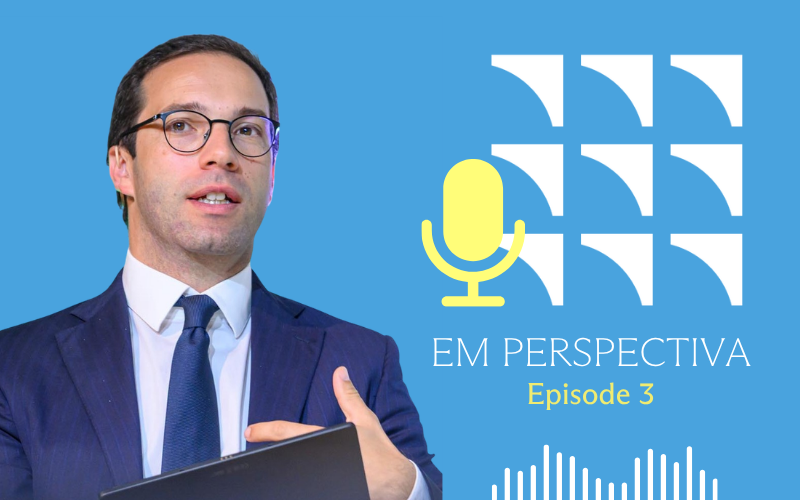
“Em Perspectiva” is ALER’s opinion feature, where we analyse the latest developments, trends and debates shaping the energy sector in Portuguese‑speaking countries.
In this special edition, Pedro Clemente (Chief Operating Officer of ALER) provides an overview of the RENMOZ in Europe event: the political messages, the role of the Global Gateway, the energy project pipeline presented by Mozambique and the impact of matchmaking on deal‑making. He also offers a preview of RENMOZ 2026, taking place in June in Maputo.
The conversation behind this article is also available as a podcast on Spotify.
Pedro, let’s start from the beginning: this RENMOZ in Europe was organised by AMER and ALER, in partnership with GET.invest and with the support of the European Union and Mozambican public authorities, within the framework of the Global Gateway. What sets this RENMOZ in Europe apart from the editions that have taken place in Maputo, and why was it so important to hold this event in Brussels?
This edition of RENMOZ was particularly innovative. For the first time, an event that has been held in Maputo since 2021 moved out of Mozambique and took place in Europe. The choice of Brussels, the political and financial centre of the European Union, was strategic: it enabled a direct meeting point between the Mozambican Government and energy institutions, and European decision‑makers, financiers, investors and companies.
The event brought together over 200 participants from 20 nationalities and 12 EU Member States, in a setting designed not only to present Mozambique’s priority project pipeline but also to promote technical and business interactions. Alongside the institutional sessions, there were detailed project presentations, B2B meetings, bilateral encounters and matchmaking sessions between Mozambican institutions and the European private sector.
The objective was clear: to showcase the potential of Mozambique’s energy sector, create opportunities for technical dialogue, clarify questions and pave the way for future memoranda of understanding, partnerships and new investments.
The presence of the President of the Republic of Mozambique gave the event additional momentum, transmitting confidence, political commitment and reinforcing the credibility of the pipeline. This high‑level involvement set the tone for the two days of work.
The presence of President Daniel Chapo truly gave a different weight to the opening of the event. Which strategic points did the President highlight?
Beyond the important political symbolism of the President’s presence at the start of the event, his intervention was also essential and highly clarifying. He highlighted Mozambique’s strategic vision for the energy sector, grounded in the pillars of the Energy Transition Strategy, and emphasised a particularly important point: the country’s ambition to establish itself as a regional energy hub.
To achieve this, and more than a simple ambition, the President stressed the efforts the country has been making to improve the business environment, strengthen transparency and enhance predictability regarding the role of the private sector and investors. All of this with the aim of leveraging and accelerating growth and driving forward the projects that are already planned to advance in the near future.
And on the European side, how did the European Union frame this event within the scope of the Global Gateway?
The European Union demonstrated strong commitment and dedication to this event, which was organised within the framework of the Global Gateway. The EU Delegation in Mozambique played a key role by mobilising Member States, coordinating resources and steering the entire Team Europe dynamic associated with this initiative.
The objective was precisely to bring Mozambique’s project pipeline and opportunities closer, as quickly as possible, to European financing instruments and to the European private sector, creating the conditions for this engagement to happen in a more direct and efficient way.
There is an important history of cooperation between the European Union and Mozambique, but there is still a long way to go. In that sense, initiatives like this one are essential. I would also highlight the intervention of Stefano Signore, from the European Commission’s Directorate‑General for International Partnerships, who referred to RENMOZ in Europe as a concrete example of how to strengthen this cooperation and deepen the EU–Mozambique relationship.
Overall, it became clear that the European Union wants to stand alongside Mozambique in its energy transition, supporting the country in mobilising investment and advancing its priority projects.
One of the major highlights of this event was the presentation of a structured project pipeline. What did this mean in practice?
This edition of RENMOZ in Europe was built around a central element: the presentation of Mozambique’s priority energy project pipeline. The work began months before the event, with Mozambican institutions – EDM, FUNAE, HCB and the Mphanda Nkuwa Hydropower Project Implementation Office – working together with the organising team to prepare, organise and structure their respective project portfolios.
During the event, these portfolios were presented in breakout sessions, where solar, hydropower, transmission and mini‑grid projects were outlined in technical detail. These sessions provided a comprehensive overview of the country’s investment and financing opportunities.
Throughout the breakout sessions, there was room for technical and financial questions, enabling participants to understand the maturity level of each project and identify concrete opportunities for the private sector to engage, invest and deepen its presence in the Mozambican market.
One of the most distinctive aspects of this event was precisely its focus on matchmaking. What impact did these structured meetings have, and how do they help pave the way for deal‑making?
This event was designed and structured specifically to promote direct engagement between Mozambican institutions, private companies and European financiers. The intention was to create real working spaces and conditions that would allow participants to go beyond superficial contact and move into alignment meetings and technical discussions.
For many European companies and investors, this was the first opportunity to speak directly with the Mozambican institutions responsible for the project pipeline. The goal was to take the first steps towards transforming matchmaking into deal‑making: not just starting conversations, but deepening partnership and investment opportunities.
The format proved highly successful. More than 130 meetings were scheduled, and it became clear that the Mozambican institutions showed strong ownership of their projects and the ability to discuss technical, financial and strategic aspects in detail. These interactions enabled concrete exploration of how new – or already established – European partners can support the implementation of the pipeline and help accelerate Mozambique’s energy transition.
Now, looking at a broader picture: why is this event so important for Mozambique and also for ALER?
I would say that this event was very successful and gave Mozambique significant international projection and visibility. By taking place in Brussels, at the heart of Europe, it brought the country closer to the European private sector and investors, showing not only its institutional readiness but also its strategic vision, effort and commitment to the priority project pipeline.
This meeting demonstrated Mozambique’s maturity and ambition while seeking to accelerate the implementation of these projects by creating the right conditions for them to move to the field as quickly as possible, in partnership with European companies and entities. It was an important moment of proximity and visibility, which we see as only the first step in an ongoing process. The intention is to continue this work and strengthen this bridge between Europe and Mozambique to speed up the country’s energy transition.
It also became clear that ALER’s Business Forum format works. There is real added value in creating these structured meeting spaces, supported by a well‑prepared and well‑presented project pipeline, and in bringing together technical teams, public institutions, investors and decision‑makers in the same space with the time and conditions needed for idea‑sharing and opportunity exploration. This is undoubtedly a model that ALER can replicate in other Portuguese‑speaking countries.
And what can we expect from RENMOZ 2026 in Maputo?
RENMOZ in Europe was, in practice, the starting point for the entire journey that now leads to RENMOZ 2026, which will take place in Maputo from 9 to 12 June. This next edition will be organised together with the EU–Mozambique Global Gateway Business Forum and will have a much larger scale, with four full days of institutional sessions, technical debates, exhibition areas, networking and deal‑making moments, field visits and side events.
The central idea is that the work initiated in Brussels will continue to evolve over the coming months. The project pipeline will be further developed and matured, and the dialogue between the European private sector and the Mozambican institutions will continue through exploratory meetings, technical exchanges and preparatory work carried out via the event’s platform.
The goal is that, by the time we arrive in Maputo, many of the conversations that began in Brussels can be consolidated and materialised. We want to reach RENMOZ 2026 with partnerships already underway, more detailed project presentations, the launch of new initiatives and concrete progress on the structural and priority projects for Mozambique’s energy sector. All of this with the aim of taking increasingly decisive steps towards Mozambique’s energy transition, which is ambitious but entirely achievable.