
São Tomé and Príncipe validates the PNIES and moves forward with new solar photovoltaic projects
São Tomé and Príncipe has validated its National Sustainable Energy Investment Plan (PNIES) and begun the construction of new solar photovoltaic projects, consolidating an investment agenda aimed at increasing generation capacity, reducing dependence on fossil fuels, and strengthening the stability of the national electricity system.
The Directorate-General for Natural Resources and Energy (DGRNE) led the validation of the PNIES during a workshop with public and private institutions and partners, emphasizing that the plan maps investment opportunities in renewables and energy efficiency for 2030, 2040 and 2050. The focus includes solar and hydropower, infrastructure modernization and efficient energy use. The process is part of an institutional capacity-building project supported by United Nations Industrial Development Organization (UNIDO) and the Green Climate Fund (GCF), and was preceded by consultation sessions and a public webinar aimed at investors and stakeholders interested in the country’s sustainable project pipeline.
The Government announced that more than 20MW will be injected into the national grid over the next two months, combining 6MW from new generators acquired by EMAE, 4.5MW from the former Voice of America generators, and around 10MW linked to the contract with Scatec, in order to stabilize supply and pave the way for renewable integration.
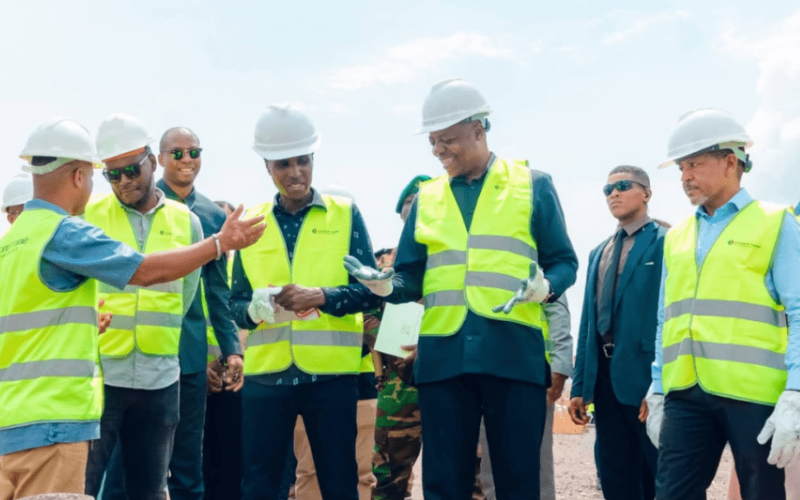
Among the flagship projects are the works for the first 11MW photovoltaic solar station in Água Casada (Lobata), following an administrative investment agreement between the Government and RELEASE São Tomé, a subsidiary of Scatec. The planned private investment amounts to €9 million, with completion expected by October 2026. The plant will generate fully “green” electricity, replacing baseload fossil generation and contributing to lower energy costs.
In parallel, the Government laid the foundation stone for another photovoltaic park, also in Água Casada, financed by the World Bank under the Clean and Sustainable Energy Access Project (AELS). The infrastructure will cover around 25 hectares and include approximately 30.000 solar panels, with estimated production of up to 30MW to strengthen the national system and create jobs during the construction phase.